ORTHODONTIC TREATMENT IN ANTALYA
Orthodontics can guide teeth and bite relationships into a planned position using clear aligners, fixed braces or a combined approach. The appliance is selected only after examining oral health, growth, tooth roots, gums, function and long-term stability.
Treatment suitability and final planning are confirmed only after the appropriate clinical assessment.
Treatment may address crowding, spacing, tooth position and selected bite relationships when movement is clinically appropriate.
Clear aligners, metal braces, ceramic braces or a combined approach are chosen for the movements, risks and cooperation required.
Teeth can move after active treatment. A personalised retainer plan and long-term monitoring protect the corrected position.
CONTROLLED TOOTH MOVEMENT
Orthodontic appliances apply controlled forces to move teeth through the supporting tissues. The plan may improve alignment, create or close space, coordinate the dental arches and address selected bite relationships.
The safest goal is not simply the fastest visible change. Tooth position, root movement, gum and bone support, jaw relationship, facial growth, restorations and long-term retention must be considered together.
ASSESSMENT BEFORE APPLIANCES
Clinical note: An online conversation can organise an assessment, but it cannot replace the in-person examination and diagnostic records needed to prescribe tooth movement.
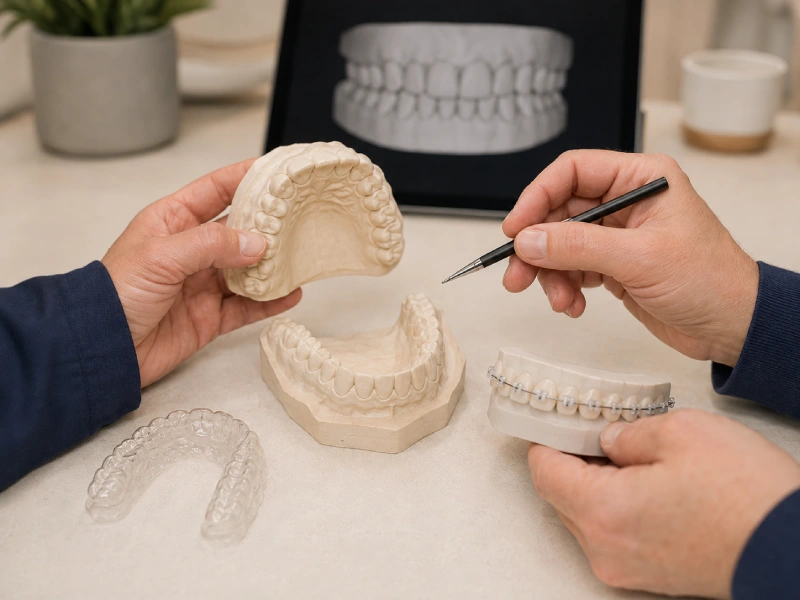
ASSESSMENT & PROCESS
Appliance choice follows the movements and biological limits identified during assessment. Digital planning may help visualise stages, but a simulation is not a guaranteed prediction of the final result.
Timing is individual: age, tooth movement, treatment complexity, biology, missed appointments, broken appliances and cooperation can all change the duration.
Concerns, symptoms, previous orthodontics, trauma, restorations, habits, medical history and expectations are discussed.
Teeth, gums, jaw relationship, bite, facial proportions, oral hygiene and functional contacts are assessed.
Photographs, scans or impressions and appropriate radiographs are selected according to clinical need.
The orthodontist plans tooth and root movement, anchorage, space management, appliance type and any coordinated care.
Aligners or braces are monitored and adjusted; hygiene, cooperation, fit and biological response are reviewed throughout.
Final tooth contacts are checked and removable, fixed or combined retainers are prescribed with a long-term review plan.
ORTHODONTIC APPLIANCES
No appliance is automatically more modern, more effective or more suitable. The orthodontist considers the required movements, predictability, visibility, cleaning, wear discipline, bite, age and follow-up needs.
A sequence of removable trays may treat selected cases. Invisalign is one aligner system; suitability depends on the planned movements, attachments, elastics, wear discipline and monitoring.
Brackets and wires remain attached to the teeth and can provide continuous control without relying on tray wear. Cleaning and food precautions require consistent attention.
Tooth-coloured brackets may be less visually prominent than metal brackets. They remain fixed appliances with individual friction, breakage, staining and bite considerations.
Selected plans may use elastics, temporary anchorage, surgical, periodontal or restorative coordination. These are added only when the diagnosis and treatment goals require them.
CLINICIAN-LED ORTHODONTICS
Orthodontic assessment at Dr. Smile Antalya is provided within a clinician-led pathway. Your treating professional, appliance, records, review schedule and responsibilities are confirmed before treatment begins.
ALIGNERS OR FIXED BRACES?
Clear aligners and fixed braces can both be effective in appropriately selected cases. Neither is inherently better. The decision is based on clinical goals and the practical responsibilities each option creates.
CLEAR ALIGNERS
Wear responsibility
Trays must be worn according to the orthodontist’s instructions. Inconsistent wear can prevent the planned movement.
Meals and cleaning
Aligners are removed for eating and oral hygiene. Teeth and trays must be cleaned before reinsertion.
Treatment mechanics
Attachments, elastics, refinements or a different appliance may be required; a digital animation does not guarantee the biological result.
Practical issues
Trays can be lost, damaged, warped or stop fitting. Contact the clinical team rather than moving ahead without advice.
FIXED BRACES
Wear responsibility
Brackets remain attached, although elastics and other instructions may still require consistent cooperation.
Meals and cleaning
Brackets and wires create extra plaque-retentive areas; careful brushing, interdental cleaning and dietary precautions are essential.
Treatment mechanics
Fixed appliances can provide direct control for many movements, but the selected bracket system does not remove biological limits.
Practical issues
Broken brackets, displaced wires or persistent pain require advice and may need an unscheduled clinical review.
Shared responsibility: Both options require healthy gums, excellent plaque control, regular clinical reviews and retainers after active treatment.
POTENTIAL BENEFITS
Orthodontics may improve selected alignment and bite relationships, create or preserve space and support cleaning or future restorative care. The benefit depends on the starting condition, achievable movement and continued retention.
Reducing selected crowding may make some surfaces easier to reach, but daily hygiene remains essential.
Selected tooth contacts and arch relationships may be improved within the limits of the jaws, growth and supporting tissues.
Treatment can create, close or maintain space for missing teeth, impacted teeth or planned restorative care when appropriate.
Moving teeth may sometimes avoid masking position with veneers or crowns, although the best option depends on the full diagnosis.
LIMITATIONS & RISKS
HYGIENE, REVIEWS & RETENTION
Brush with fluoride toothpaste, clean between teeth and around the appliance, attend routine dental care and follow dietary or aligner instructions. Report broken appliances, trays that no longer fit, persistent pain, swelling, gum changes or trauma promptly.
Retention is a long-term commitment. Removable, fixed or combined retainers can need cleaning, repair, replacement and continued review; no retainer removes all possibility of future tooth movement.
REAL ORTHODONTIC PATIENT RESULTS
Show consented Dr. Smile Antalya orthodontic cases only after the starting diagnosis, age or growth context, appliance, adjunctive procedures, treatment duration, limitations, complications, finishing records, retention plan and follow-up have been clinically verified.

Individual results vary. Images must have documented patient consent, and treatment descriptions must be clinically verified before publication.
INTERNATIONAL PATIENT SEQUENCE
Photographs can begin a conversation, but safe orthodontic care requires an in-person examination, diagnostic records and repeated monitoring. Before travelling, confirm who will provide reviews, appliance adjustments, urgent care and retention support over the full treatment period.
Share your concern, previous orthodontic history and location. The team will explain which non-sensitive records may help organise the first visit.
The orthodontist confirms oral health, bite, records, appliance options, risks, duration factors and whether other dental care comes first.
Regular clinical monitoring and adjustments are planned in advance; aligner collection alone does not replace professional review.
Know whom to contact locally for broken appliances or trauma and how retainers, replacements and long-term follow-up will be managed.
FREQUENTLY ASKED QUESTIONS
These answers are general information. Your orthodontist must explain what applies to your teeth, roots, gums, jaws, appliance, monitoring and retention.
It may address selected crowding, spacing, tooth position, arch coordination and bite relationships. The achievable goal depends on the teeth, roots, gums, bone, jaw relationship, growth and treatment cooperation.
No appliance is automatically better. Clear aligners are removable and depend strongly on wear; fixed braces provide continuous attachment but require detailed cleaning and food precautions. The planned movements guide the choice.
Invisalign is one commercial clear aligner system. The brand does not confirm suitability, predictability or outcome; diagnosis, movement planning, monitoring and retention remain essential.
There is no universal duration. Complexity, age or growth, tooth movement, biology, appliance, cooperation, missed visits, breakages and refinements all affect timing.
Pressure or soreness can occur after fitting, adjustments or changing aligners. Appliances can also irritate soft tissues. Persistent or severe pain, swelling or trauma should be assessed.
Not everyone does. Space may be managed in several ways. Extraction, interproximal reduction, arch development or other methods are considered only after the diagnostic plan and alternatives are discussed.
A remote discussion can help organise care, but photographs or a scan alone cannot assess every tooth, root, gum, bone and bite factor. An appropriate clinical examination and records are required before prescribing movement.
Possibly, but regular monitoring, appliance adjustments, urgent care and retention must be practical and agreed before treatment. It should not be planned as a single short dental-tourism visit.
Yes, retention is a standard part of orthodontic care. Removable, fixed or combined retainers may be prescribed and can require long-term wear, cleaning, repair, replacement and review.
Yes. Teeth and jaws can change throughout life, and relapse can occur. Wearing and maintaining retainers as prescribed reduces risk but cannot guarantee that no movement will ever happen.
ASK ABOUT ORTHODONTICS
Tell us what concerns you, whether you have had previous orthodontic treatment and where you live. Mention any broken retainers, gum problems, impacted teeth, jaw symptoms, restorations or previous dental trauma. Our patient coordination team will explain the next appropriate step.
WhatsApp: +90 545 213 09 59
Clinic: +90 545 213 09 09
Email: info@drsmileantalya.com
Fields marked as required must be completed.