ALL-ON-4 DENTAL IMPLANTS IN ANTALYA
A fixed full-arch approach supported by four strategically distributed implants in selected patients — planned around bone, gums, bite, general health and long-term maintenance.
Treatment suitability and final planning are confirmed only after the appropriate clinical assessment.
A one-piece fixed restoration can replace a complete upper or lower arch when the clinical conditions are suitable.
Four appropriately distributed implants may support the planned arch; their position and stability are clinically assessed.
Existing teeth, bone, gums, anatomy, bite, medical history, hygiene and expectations all influence the plan.
WHAT IS ALL-ON-4?
All-on-4 is a treatment concept for replacing a complete arch of teeth with a fixed implant-supported restoration. Four implants are distributed across the jaw to support the planned prosthesis; posterior implants may be angled when anatomy and the prosthetic plan indicate it.
It is one possible full-arch pathway, not an automatic answer for every patient. The team must first consider whether teeth can be preserved and whether a fixed, removable or alternative implant plan better matches your needs.
WHO MAY BE CONSIDERED?
Assessment may be appropriate for people who:
Smoking, active gum disease, uncontrolled health conditions, bite forces and other findings may change suitability or timing.
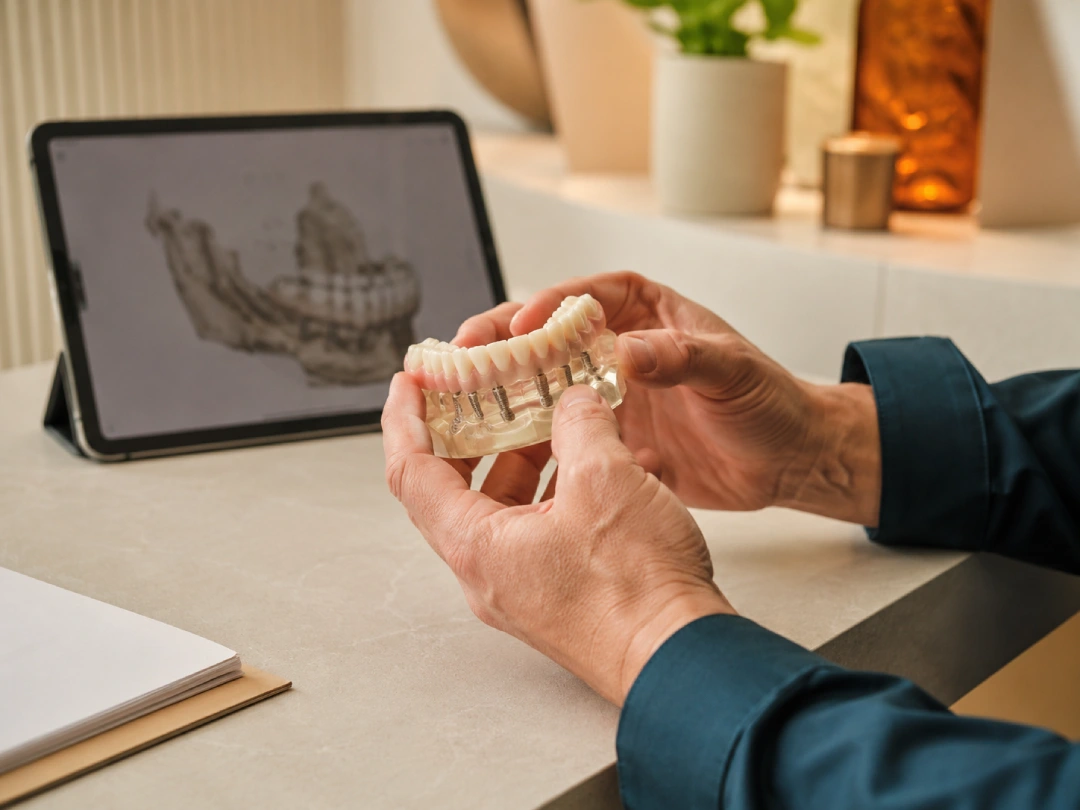
Illustrative image: diagnostic records, implant positions and restorative design are individual to each patient.
THE ALL-ON-4 JOURNEY
The exact sequence and number of visits depend on your starting condition, healing and chosen restorative plan.
Discuss missing teeth, current dentures, health history, expectations and what you need from a full-arch solution.
The dentist examines teeth, gums and bite and decides which photographs, scans and three-dimensional imaging are required.
Implant number, distribution, restorative space, hygiene access, materials, alternatives and foreseeable limitations are explained.
If clinical criteria are met, an interim fixed restoration may be fitted within the planned loading protocol. This is not appropriate in every case.
Healing and tissue response are monitored before the definitive restoration and an individual maintenance programme are completed.
ALL-ON-4 VS ALL-ON-6
Both approaches can support a fixed full-arch restoration. The appropriate number depends on anatomy, bone volume, the planned prosthesis, hygiene access, bite forces, implant distribution and the effect any future implant complication could have on support.
Four appropriately distributed implants support a one-piece full-arch restoration.
Implant position, primary stability, bone, restorative space and maintainable hygiene access are central.
A four-implant design provides an appropriate foundation for the proposed arch after assessment.
Six implants are planned to support the full-arch restoration when this arrangement is clinically appropriate.
Available bone, anatomy, restorative design, implant distribution and maintainability still guide the decision.
Additional implants offer a useful option for the intended prosthetic plan and the anatomy allows their appropriate placement.
Clinical note: The implant count is not chosen from a website comparison. Final planning follows examination, imaging and a prosthetically driven assessment.
POTENTIAL BENEFITS
When properly selected and planned, a full-arch fixed solution may improve how a patient approaches eating, speaking and smiling compared with an unstable removable denture.
The planned prosthesis remains fixed for day-to-day use and is professionally maintained.
Appropriately distributed implants support the arch while respecting anatomical and prosthetic requirements.
A fixed interim restoration may be possible within an immediate or early loading plan when clinical criteria are met.
Tooth position, bite, speech, appearance and cleaning access are considered together.
IMPORTANT CONSIDERATIONS
TREATMENT TIMELINE
A website cannot promise a fixed number of days. Extractions, infection control, implant stability, healing, laboratory stages and the final material all influence timing.
Share relevant history and records; receive guidance on what must be assessed in person.
Clinical examination and imaging confirm whether the proposed approach and loading plan are appropriate.
Surgical and interim restorative stages follow the consented individual plan.
The team monitors healing, hygiene and function before definitive restorative decisions.
Daily home care and periodic professional reviews protect the implants, tissues and prosthesis.
REAL ALL-ON-4 PATIENT RESULTS
Explore consented Dr. Smile Antalya All-on-4 cases with clinically verified treatment details. Each plan was shaped by that patient’s starting condition, anatomy, restorative needs and maintenance requirements.

Individual results vary. Images must have documented patient consent, and treatment descriptions must be verified before publication.
INTERNATIONAL PATIENT JOURNEY
An initial remote review can guide the conversation, but it does not confirm diagnosis, suitability, implant stability or the final treatment sequence.
Explain your priorities and receive secure guidance on relevant records.
The team outlines possibilities, alternatives and what must be confirmed in Antalya.
Examination and appropriate imaging determine whether the proposed full-arch route can proceed.
You receive individual instructions and a review plan, including when local dental care is required.
FREQUENTLY ASKED QUESTIONS
These answers are general information. Your dentist will explain what applies to your jaw, health and restorative plan.
No. The concept uses four implants to support a full-arch fixed restoration rather than one implant for each missing tooth.
No. An immediate or early fixed interim restoration depends on factors such as primary implant stability, bone, the surgical plan and whether additional procedures are needed.
No. Angled implant placement may help in selected anatomy, but grafting or a different treatment may still be indicated after examination and imaging.
The planned number and distribution of implants differ. Neither is automatically better; anatomy, restorative design, hygiene access, bite and long-term support guide the decision.
Preserving maintainable natural teeth should be considered. If teeth remain, the dentist explains preservation and alternative options as part of informed consent.
Daily cleaning around implants and beneath the prosthesis is essential. The team demonstrates suitable tools and sets a professional supportive-care schedule.
Timing varies with oral health, extractions, implant stability, healing and laboratory stages. The clinical team confirms your sequence after assessment.
Yes. The prosthesis and its components can wear, loosen or fracture, and peri-implant tissues need monitoring. Regular reviews help identify problems early.
Begin with your main concern, relevant dental and medical history and any available recent records. The team will explain what else is useful and how to share it appropriately.
ASK ABOUT ALL-ON-4
Tell us about your current teeth or denture, your priorities and relevant history. Our patient coordination team will explain what information may be useful next.
WhatsApp: +90 545 213 09 59
Clinic: +90 545 213 09 09
Email: info@drsmileantalya.com
Fields marked as required must be completed.