ZIRCONIA CROWNS IN ANTALYA
A zirconia crown can cover and restore a damaged or structurally compromised tooth. The decision begins with the remaining tooth, gums, bite and treatment alternatives — then moves to material, shape and shade.
Treatment suitability and final planning are confirmed only after the appropriate clinical assessment.
A crown covers the prepared part of a natural tooth or is connected to an implant abutment as part of a planned restoration.
Different zirconia formulations and designs balance appearance, strength, space and laboratory requirements differently.
Decay, gum health, remaining tooth structure, bite and alternatives are considered before shape and shade are finalised.
WHAT IS A ZIRCONIA CROWN?
Often marketed as zirconium crowns, the dental material is zirconia — zirconium dioxide ceramic. A zirconia crown is a custom full-coverage restoration used on a prepared tooth or, in a different design, over a dental implant.
Zirconia is available in different formulations and restorative designs. Translucency, strength, thickness, surface finish, laboratory technique and the position of the tooth all influence material selection. No single zirconia option is automatically right for every front or back tooth.
WHO MAY BE CONSIDERED?
A crown assessment may be appropriate when a tooth has a large restoration, fracture, significant wear, root-canal treatment or another structural reason for full coverage. A zirconia implant crown may also be considered within an implant treatment plan.
Active decay or gum disease, limited remaining tooth structure, clenching or grinding, bite problems and the possibility of a more conservative restoration can change the recommendation. Examination and appropriate records are required.
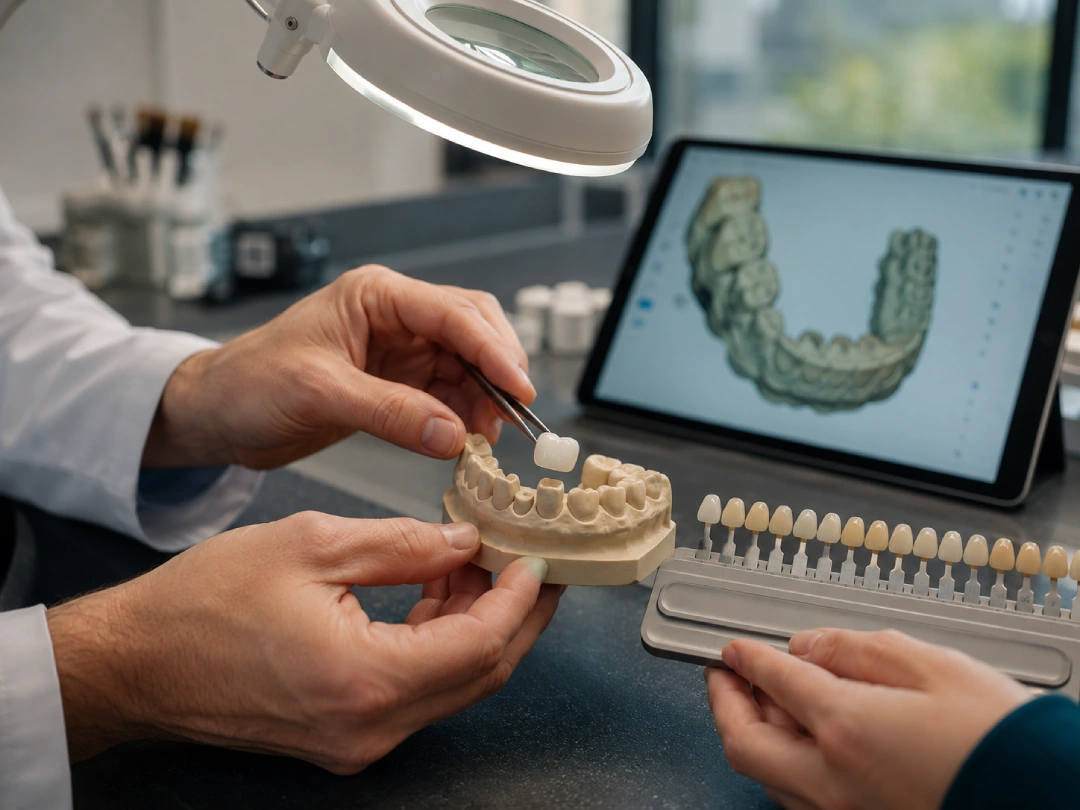
Illustrative image: material, preparation and laboratory decisions are confirmed individually after examination.
THE ZIRCONIA CROWN PROCESS
The sequence varies with the condition of the tooth, gums, bite, need for foundation treatment and the selected restorative workflow.
Discuss the tooth, symptoms, appearance, health history and what you would like the restoration to achieve.
The dentist assesses decay, gum health, remaining tooth structure, bite and whether a crown or a more conservative alternative is appropriate.
If a crown is selected, the tooth is prepared and records are taken. A provisional restoration may be used while the definitive crown is made.
The clinical and laboratory teams select the zirconia formulation, contour, surface and shade for the tooth position and bite.
Fit, contacts, bite and appearance are assessed before final placement. Follow-up and home-care instructions are individualised.
CROWN OR ALTERNATIVE?
A crown requires tooth preparation and is not interchangeable with every cosmetic treatment. The most conservative suitable option should be considered alongside strength, function, appearance and prognosis.
A tooth needs full coverage because of structural loss, a large restoration, fracture, wear or restorative requirements.
Preparation is irreversible and future maintenance or replacement may be required.
Composite repair, veneer, inlay, onlay or overlay when enough healthy tooth structure remains and the option fits the bite.
Whitening or orthodontics may address colour or position without using a crown; each has different indications and limits.
Clinical note: The recommended restoration depends on examination, imaging where indicated and the long-term outlook for the tooth.
NOT ALL ZIRCONIA IS THE SAME
Zirconia restorations differ in composition, translucency, strength and whether ceramic is layered over a zirconia framework. The final choice is made with the tooth position, bite and appearance in mind.
The crown is milled mainly as one zirconia structure; formulation, thickness and surface finishing still matter.
A zirconia framework may be combined with veneering ceramic for selected aesthetic or design requirements.
More translucent zirconia formulations may support aesthetic goals, but material properties and indications vary.
A crown on a prepared tooth and a crown connected to an implant require different biological and technical planning.
POTENTIAL BENEFITS
LIMITATIONS & MAINTENANCE
TREATMENT SEQUENCE
A remote message cannot confirm the final schedule. Decay control, gum health, foundation treatment, provisional restoration, laboratory stages, fit and any need to monitor symptoms can change the sequence.
Share the tooth concern and relevant records; receive guidance on what must be assessed in person.
Examination determines restorability, treatment alternatives and whether other care is required first.
Preparation, records, provisional care where required, laboratory work and final placement follow the individual plan.
The team checks comfort, bite, hygiene and the health of the tooth and surrounding tissues.
REAL ZIRCONIA CROWN RESULTS
Show consented Dr. Smile Antalya crown cases only after the diagnosis, treated teeth, material and accompanying procedures have been clinically verified.

Individual results vary. Images must have documented patient consent, and treatment descriptions must be clinically verified before publication.
INTERNATIONAL PATIENT JOURNEY
An initial remote review can help organise questions and records, but it cannot confirm diagnosis, tooth preparation, material or the final number of visits.
Explain the tooth concern, symptoms and priorities; receive guidance on relevant photographs or existing records.
The team outlines possible crown and alternative routes and explains what remains to be confirmed.
Examination establishes restorability, gum health, bite, preparation needs and the final material plan.
Placement, bite review, hygiene instructions and any appropriate follow-up are coordinated individually.
FREQUENTLY ASKED QUESTIONS
These answers are general information. The treating dentist must explain what applies to your tooth, bite and restorative options.
The terms are often used interchangeably in dental marketing. The ceramic used for these restorations is zirconia, or zirconium dioxide.
A crown may be considered when structural damage, a large restoration, fracture, wear, root-canal treatment or another restorative need makes full coverage appropriate.
A crown covers the prepared tooth more fully. A veneer generally covers the front surface and is used for different indications. The more conservative suitable option should be considered.
Shape, shade, translucency, surface texture, neighbouring teeth and the selected zirconia design all influence appearance. Results vary with the clinical and laboratory situation.
Yes. A full-coverage crown requires preparation. The amount and design depend on the tooth, material and restorative plan.
It may be one restorative option, but the remaining tooth structure, foundation, fracture risk and overall prognosis must be assessed first.
Different zirconia formulations and designs may be considered in either region. Tooth position, space, bite and appearance guide selection.
There is no fixed lifespan. Tooth condition, material and design, fit, bite, grinding, hygiene, decay risk and reviews all influence maintenance and replacement needs.
No. Whitening changes natural tooth shade but does not lighten ceramic crowns. Shade planning should consider current teeth and future whitening goals.
Brush with fluoride toothpaste, clean between teeth, attend recommended reviews and seek advice if the crown feels loose, chipped, painful or the bite changes.
ASK ABOUT ZIRCONIA CROWNS
Tell us which tooth concerns you, whether you have symptoms and what you would like to understand. Our patient coordination team will explain what information may be useful for an initial review.
WhatsApp: +90 545 213 09 59
Clinic: +90 545 213 09 09
Email: info@drsmileantalya.com
Fields marked as required must be completed.