ORAL & MAXILLOFACIAL SURGERY IN ANTALYA
Oral and maxillofacial surgery covers a wide range of conditions affecting the mouth, jaws, jaw joints and facial structures. The first decision is not the operation — it is the diagnosis, urgency, responsible clinical team and safest treatment setting.
Treatment suitability and final planning are confirmed only after the appropriate clinical assessment.
Symptoms, medical history, examination and appropriate imaging determine whether observation, non-surgical care, oral surgery or hospital-based treatment should be considered.
Impacted teeth, jaw deformity, TMJ disease, pathology and trauma have different teams, facilities, risks and follow-up requirements.
Local anaesthetic clinic care, sedation, day surgery and inpatient hospital treatment are not interchangeable; the confirmed procedure determines the setting.
ONE SPECIALTY, MANY DIFFERENT CONDITIONS
Oral and maxillofacial surgery may involve dentoalveolar procedures such as selected complex extractions, or broader care involving jaw position, facial skeleton, jaw joints, pathology, infection, trauma or reconstruction.
The title of the specialty does not mean every problem needs surgery or that every procedure belongs in a dental clinic. The diagnosis and required level of care must be established first.
ASSESSMENT BEFORE INTERVENTION
Urgent-care note: Rapidly increasing facial swelling, difficulty breathing or swallowing, uncontrolled bleeding, severe trauma, fever with spreading infection or sudden neurological symptoms require urgent local medical assessment — not a routine travel enquiry.
ASSESSMENT & PLANNING
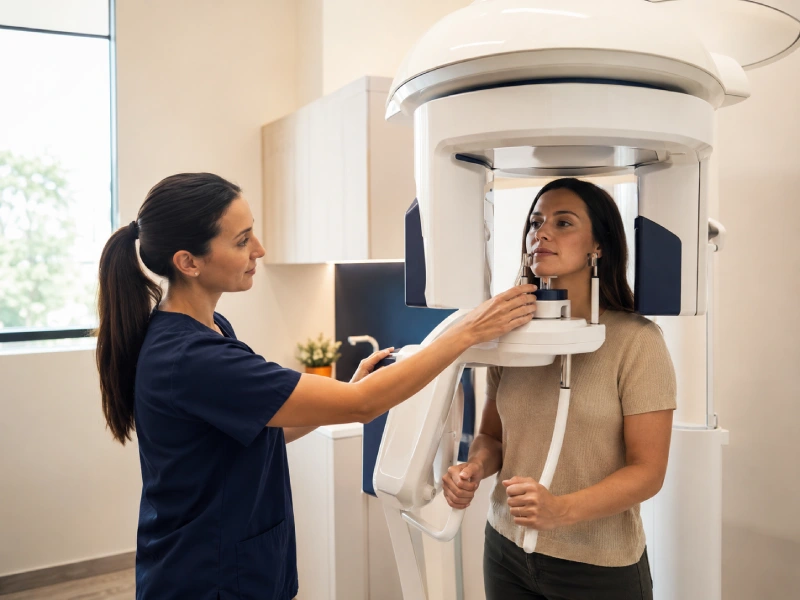
Imaging supports a clinical question; it does not replace examination or automatically determine treatment. The field of view and imaging method should match the suspected condition while limiting unnecessary exposure.
Planning may be multidisciplinary: orthodontics, restorative dentistry, radiology, pathology, ENT, anaesthesia or hospital services may be involved according to the diagnosis.
Symptoms, duration, previous treatment, medicines, allergies, medical conditions and relevant surgical history are recorded.
Oral tissues, teeth, jaw movement, bite, facial symmetry, sensation and the area of concern are assessed as appropriate.
Existing records are reviewed; panoramic imaging, CBCT/CT, MRI, laboratory tests or biopsy are requested only when clinically indicated.
Observation, non-surgical care, dental treatment, surgery, referral and the consequences of no treatment are discussed.
The responsible clinician, clinic or hospital, anaesthesia method, support team and emergency arrangements are confirmed.
Procedure-specific risks, recovery, travel, review and urgent-contact instructions are agreed before treatment proceeds.
POSSIBLE CARE PATHWAYS
The examples below explain why one general “maxillofacial surgery package” would be misleading. Indication, clinician, facility, anaesthesia and follow-up differ substantially.
Selected complex extractions, impacted wisdom teeth, retained roots, apical surgery or related procedures may be considered after symptoms, tooth value, anatomy and nerve or sinus proximity are assessed.
Jaw-position surgery is generally a hospital-based, multidisciplinary pathway coordinated with orthodontics. Skeletal diagnosis, airway, bite, facial balance and long-term stability guide the plan.
Jaw-joint sounds or pain do not automatically require surgery. Reversible conservative care is commonly considered first; arthrocentesis, arthroscopy or open surgery are reserved for selected diagnoses.
A persistent lesion may require imaging, biopsy, pathology review, removal, surveillance or hospital referral. Appearance alone cannot establish the diagnosis.
TRAUMA, SPREADING INFECTION OR AIRWAY CONCERN
Facial fractures, uncontrolled bleeding, rapidly spreading infection, breathing or swallowing difficulty and significant neurological changes should be assessed urgently where the patient is located. Do not delay emergency care while arranging international travel.
TREATMENT SETTING & TEAM
A minor oral-surgery procedure and corrective jaw surgery do not belong in the same operational pathway. The team must confirm the appropriate environment before dates, flights or accommodation are finalised.
CLINIC OR DAY-SURGERY PATHWAY
Possible scope
Selected extractions, impacted teeth or limited diagnostic procedures may be suitable when anatomy, medical risk and local facilities allow.
Anaesthesia
Local anaesthetic, sedation or another approach is chosen for the patient and procedure; availability and suitability must be confirmed.
Discharge & review
Written aftercare, bleeding and infection instructions, escort requirements and a practical review or emergency-contact route are required.
HOSPITAL & MULTIDISCIPLINARY PATHWAY
Possible scope
Orthognathic surgery, major reconstruction, significant pathology or complex medical risk may require hospital resources and several specialties.
Anaesthesia & admission
General anaesthesia, inpatient monitoring, blood tests, medication planning and hospital-specific pre-assessment may be necessary.
Long-term sequence
Orthodontics, staged surgery, diet, healing, rehabilitation, plate or screw review and local follow-up may extend beyond one trip.
Important: This page does not confirm that a named operation can be performed at the clinic. The responsible surgeon, facility and treatment pathway are confirmed only after assessment.
POTENTIAL PURPOSE OF TREATMENT
When surgery is indicated, the goal may be to remove disease, resolve selected infection, protect neighbouring structures, obtain a diagnosis, improve jaw function or correct a clinically significant skeletal relationship. The expected benefit is procedure- and patient-specific.
Biopsy, removal or drainage may be considered to establish a diagnosis or manage selected pathology or infection.
Planning considers neighbouring teeth, nerves, sinus, bone and soft tissues rather than focusing only on the target tooth or lesion.
Selected orthognathic or joint pathways may address significant functional problems when the diagnosis and risk-benefit balance support intervention.
Diet, hygiene, medication, swelling control, physiotherapy or orthodontic care and follow-up are planned around the specific operation.
LIMITATIONS & RISKS
RECOVERY & AFTERCARE
Recovery depends on the operation, anaesthesia, medical health and individual healing. Follow the procedure-specific instructions for bleeding, swelling, diet, oral hygiene, medicines, activity and review.
Seek prompt advice for uncontrolled bleeding, worsening swelling, fever, breathing or swallowing difficulty, severe or increasing pain, persistent vomiting, new neurological symptoms or any concern listed by the treating team.
REAL MAXILLOFACIAL CASES
Show consented Dr. Smile Antalya cases only after the diagnosis, clinical indication, treating clinician and facility, procedure, anaesthesia, risks, complications, recovery and follow-up have been verified. Use extra caution with identifiable facial images and diagnostic records.

Individual results vary. Images and records must have documented patient consent, and every clinical description must be verified before publication.
INTERNATIONAL PATIENT SEQUENCE
Maxillofacial care may range from a selected outpatient procedure to a hospital-based multidisciplinary pathway. Travel dates cannot safely be based on a procedure name or photograph alone.
Share the concern, symptoms, medical history and existing non-sensitive records. Urgent symptoms are directed to local emergency care.
Examination and appropriate diagnostics confirm the diagnosis, alternatives, procedure, clinician, setting and anaesthesia pathway.
Escort needs, medication, diet, activity, review dates, fitness to travel and potential schedule changes are discussed before booking.
Know who will manage routine review and how bleeding, infection, altered sensation, hardware or jaw-function concerns will be assessed after return.
FREQUENTLY ASKED QUESTIONS
These answers are general information. The responsible clinician must explain what applies to the diagnosis, proposed procedure, anaesthesia, treatment setting and follow-up.
The specialty covers many different conditions of the mouth, jaws, jaw joints and facial structures. Care may range from selected oral surgery to hospital-based jaw, trauma, pathology or reconstructive treatment.
No. Observation, dental treatment, conservative care, medication, physiotherapy, specialist review or another pathway may be more appropriate. Surgery follows a diagnosis and risk-benefit discussion.
No. Removal is considered when symptoms, disease, damage or another clinical indication outweigh the risks of monitoring. Nerve, sinus and neighbouring-tooth anatomy influence the plan.
Usually not. Jaw-joint sounds without pain can be normal, and many TMD symptoms are managed conservatively. Surgery is reserved for selected diagnoses after appropriate assessment and non-surgical care.
It is surgery to reposition one or both jaws for selected skeletal and bite problems. It is generally coordinated with orthodontics and performed through a hospital-based surgical and anaesthetic pathway.
Not everyone needs the same imaging. The clinician chooses the method and field of view according to the suspected condition, existing records and the information needed for safe planning.
Local anaesthetic, sedation or general anaesthesia may be considered depending on the procedure, medical history, facility and responsible clinical team. Suitability cannot be confirmed online.
There is no universal recovery period. The operation, anaesthesia, swelling, pain, diet, medical health, complications and review requirements determine the sequence and fitness to travel.
Existing images may help triage and organise an assessment, but they cannot replace clinical examination or guarantee a diagnosis, procedure, facility, timing or final treatment plan.
Rapidly increasing swelling, breathing or swallowing difficulty, uncontrolled bleeding, severe trauma, fever with spreading infection, sudden weakness or altered consciousness require urgent local medical assessment.
ASK ABOUT SURGICAL ASSESSMENT
Tell us where the problem is, how long it has been present and whether you have pain, swelling, altered sensation, limited opening, bite change or previous treatment. Do not use this form for emergencies or include highly sensitive medical information.
WhatsApp: +90 545 213 09 59
Clinic: +90 545 213 09 09
Email: info@drsmileantalya.com
Fields marked as required must be completed.