
THE KEY POINT
A sinus lift is part of an implant plan—not a routine step for everyone.
A sinus lift may be considered when there is not enough bone beneath the maxillary sinus to support an implant in the back of the upper jaw. Whether it is needed depends on the planned restoration, available bone, sinus anatomy, health factors and the implant strategy.
Photographs alone cannot confirm suitability. The final decision should follow an examination, appropriate three-dimensional imaging and a discussion of the benefits, risks, alternatives, graft material and treatment timeline.
THE PROCEDURE
What is sinus lift surgery?
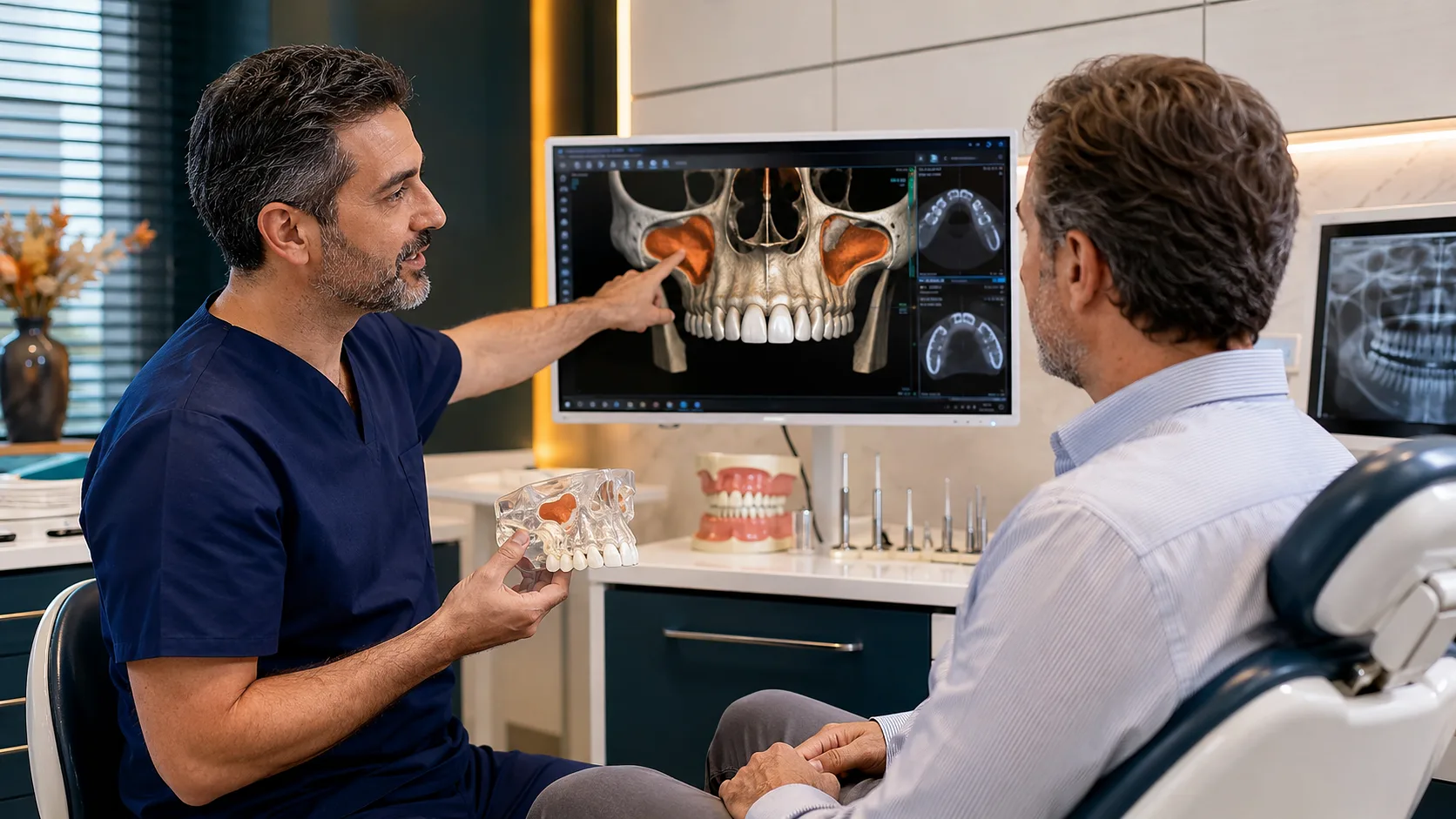
The maxillary sinuses are air-filled spaces above the upper premolar and molar areas. A thin membrane lines the inside of each sinus. During a sinus lift, this lining is carefully elevated to create space for graft material beneath it.
The aim is to increase the amount of bone available for implant treatment in the posterior upper jaw. The implant may sometimes be placed during the same procedure; in other cases, the graft is allowed to mature before implant placement.
- A restorative-led implant plan before choosing a graft procedure
- Appropriate 3D imaging of bone height and sinus anatomy
- Review of sinus health, medicines, smoking and healing factors
- A clear explanation of graft materials, risks and alternatives
- A staged timeline covering graft, implant, restoration and follow-up
ASSESSMENT AND PLANNING
CLINICAL REVIEW
The implant plan comes first
3D assessment
Bone height, width and nearby sinus anatomy
Health review
Sinus symptoms, medicines, smoking and healing factors
Restorative plan
Implant position, timing and the final tooth design
How suitability is assessed
The clinician begins with your dental and medical history, current medicines, smoking status, previous implant or graft treatment and any history of sinus disease or surgery. An examination assesses the teeth, gums, bite and proposed implant area.
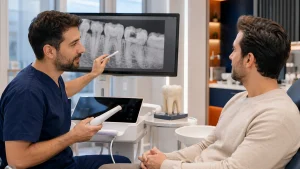
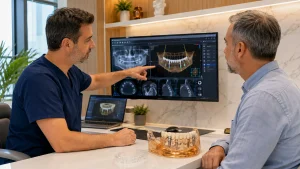
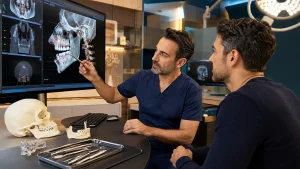
A cone beam CT scan may be requested to show the available bone and the relationship between the implant site and the sinus. The scan can also reveal findings that may require further dental, surgical or ear, nose and throat assessment before treatment.
The plan should explain whether a sinus lift is recommended, which approach is proposed, whether the implant can be placed at the same time and what graft or membrane products may be used. If products have human, animal or synthetic origins, this should be discussed before consent.
WHY IT MAY BE NEEDED
When might a sinus lift be considered?
After upper back teeth are lost, the supporting jawbone can reduce over time. The position of the sinus floor may also leave limited bone height at the planned implant site. In selected cases, this means a conventional implant cannot be placed in the intended position without additional bone augmentation.
A sinus lift is not the only possible answer. Depending on the anatomy and restorative goal, alternatives may include shorter implants, different implant positions, fewer implants, a bridge, a removable denture or accepting the space. Every option has its own limitations and should be compared for the individual case.
Limited bone does not automatically mean one technique.
The amount and quality of bone, sinus shape, neighbouring teeth, bite forces and final restoration all influence the decision. Ask why the proposed technique is suitable for you and what would happen if you chose an alternative or no surgical treatment.
TREATMENT OPTIONS
How can a sinus lift be performed?
Sinus augmentation is broadly described as an internal or external approach. The exact technique depends on how much bone is present, how much additional height is needed and whether the implant can achieve suitable stability.
INTERNAL APPROACH
Crestal Sinus Lift
The sinus floor is approached through the implant preparation site. This may be considered when some existing bone is present and a relatively limited increase is planned.
EXTERNAL APPROACH
Lateral Window Sinus Lift
A small opening is created from the side of the upper jaw so the sinus lining can be raised and graft material placed underneath. It may be considered when more augmentation is required.
ONE SURGICAL STAGE
Simultaneous Implant Placement
If there is enough existing bone to provide suitable initial implant stability, the implant and sinus graft may sometimes be placed during the same appointment.
STAGED TREATMENT
Implant Placement After Healing
When initial stability is not possible or more augmentation is needed, the graft may be allowed to mature before a separate implant procedure is planned.
MATERIALS
Graft and Membrane Options
Materials can come from the patient, human donor sources, animal-derived products or synthetic substitutes. A membrane may also be used. The proposed source and alternatives should be explained before consent.
ALTERNATIVES
Other Implant or Tooth-Replacement Plans
Shorter or differently positioned implants, bridges, dentures and no replacement may be reasonable in selected cases. Avoiding a sinus lift does not automatically make another option simpler or better.
SURGERY AND RECOVERY
What to expect before and after a sinus lift
Many sinus lift procedures are completed with local anaesthesia, although sedation or general anaesthesia may be considered for selected cases. The surgeon raises the gum, accesses the sinus using the planned approach, gently elevates the lining, places the graft material and closes the area with stitches.
Swelling, bruising, discomfort, minor bleeding and a feeling of sinus fullness can occur. Important risks include tearing of the sinus membrane, infection, graft exposure or failure, insufficient new bone, communication between the mouth and sinus, and the need for additional treatment. Implant success is not guaranteed simply because grafting has been completed.
Follow the instructions provided for medicines, oral hygiene, diet and activity. You may be advised not to blow your nose for a defined period and to contact the team if pain or swelling worsens, bleeding persists, or unusual nasal or sinus symptoms develop.
Bone healing takes longer than gum healing.
The gum can look settled before the graft has matured. Depending on the technique and individual healing, implant placement or restoration may be planned months later. Review appointments and imaging determine when the next stage is appropriate.
YOUR TREATMENT PATHWAY
How sinus lift treatment is planned
A written plan should connect the graft procedure to the final implant-supported tooth. International patients should understand every visit before arranging travel.
01
Share records for an initial review
Provide requested X-rays, scans, photographs, medical information, medicine details and any history of sinus problems or previous treatment.
02
Complete the clinical and 3D assessment
The clinician assesses the implant site, available bone, sinus anatomy, oral health and the proposed final restoration before confirming options.
03
Agree the technique, material and consent
Confirm the proposed approach, graft source, implant timing, anaesthesia, important risks, alternatives, expected reviews and possible changes.
04
Complete surgery and early review
Follow the discharge instructions carefully and attend the planned wound or stitch review. Contact the team promptly about unexpected symptoms.
05
Allow graft maturation before restoration
The next stage may involve implant placement, implant integration and several restorative appointments. Timing is confirmed from healing and clinical findings—not a fixed calendar alone.
WHY DR. SMILE ANTALYA
Clear planning from graft to final tooth
Dr. Smile Antalya can coordinate initial record sharing, three-dimensional assessment and English-language communication for international patients considering implant-related bone augmentation. The first review helps identify whether further examination or imaging is required.
If a sinus lift is proposed, request a written plan connecting the graft, implant and final restoration. It should identify the clinician responsible, technique, graft material, treatment stages, recovery instructions, review schedule and emergency contact arrangements.
The goal is not simply to add bone, but to create a clinically appropriate pathway for the planned implant-supported tooth while making the risks, alternatives and patient responsibilities clear.
COMMON QUESTIONS
Frequently asked questions
No. It is considered only when the planned implant site does not have suitable bone for the proposed treatment. Some patients can be managed with another implant position, implant design or tooth-replacement option.
An internal approach reaches the sinus through the implant preparation site and may suit a limited increase when some bone is present. An external approach uses a side window and may be considered when more augmentation is needed.
Sometimes. Simultaneous placement depends on the amount and quality of existing bone and whether the implant can achieve suitable initial stability. Otherwise, implant placement is planned after graft maturation.
Healing varies with the technique, graft material, amount of augmentation and individual response. Published NHS guidance describes a pathway that can take several months before implant placement or restoration. Your reviews determine the next stage.
Local anaesthesia is commonly used to control pain during the procedure. Swelling, bruising, discomfort and sinus fullness can occur afterwards. Follow the personalised pain-control and aftercare instructions.
Travel advice is procedure- and patient-specific because pressure changes and early complications must be considered. Confirm the safe flight window with the treating clinician before booking a fixed return journey.
Sources and content note
The definition, approaches, graft materials, alternatives, risks and consent information were checked against Cambridge University Hospitals sinus lift guidance. Bone-graft recovery and risk information was checked against Guy’s and St Thomas’ NHS Foundation Trust. Three-dimensional assessment and implant-treatment staging were checked against Leeds Teaching Hospitals NHS Trust. Content updated 31 August 2026.
This article provides general information only. It does not replace an examination, diagnosis, consent discussion or personalised advice from the clinician responsible for your care.