

THE KEY POINT
All-on-4 is a full-arch treatment pathway—not simply four implants and instant final teeth.
The All-on-4 concept uses four implants to support a fixed full-arch dental prosthesis in selected patients. It can be an option for a jaw with no teeth or teeth that cannot reasonably be maintained, but suitability depends on diagnosis, available bone, bite, health factors, restorative space and the ability to maintain the result.
A provisional fixed bridge may sometimes be fitted soon after surgery when clinical conditions allow. This is not the final restoration, and immediate loading cannot be promised before the implants are placed and their stability is assessed.
THE TREATMENT CONCEPT
What is the All-on-4 implant technique?
In an All-on-4 restoration, four implants are positioned across one jaw to support a fixed full-arch bridge. The rear implants may be angled in selected cases to use available bone and help distribute support for the prosthesis.
The name describes one treatment concept, not the only way to restore a complete arch. Some patients may be better served by preserving teeth, using a removable implant overdenture, placing a different number of implants or completing grafting before implant treatment.
- A clear prognosis for every remaining tooth before extraction
- 3D, bite, smile and restorative-space assessment
- A medical, smoking and healing-risk review
- Written provisional and definitive bridge plans
- Long-term hygiene, maintenance and emergency arrangements
ASSESSMENT AND PLANNING
CLINICAL PRIORITY
Preserve suitable teeth before replacing an arch
Tooth prognosis
Which teeth can predictably be maintained?
3D and prosthetic plan
Bone, anatomy, bite, smile and restorative space
Whole-patient review
Health, medicines, smoking and maintenance ability
Who may be considered for All-on-4?
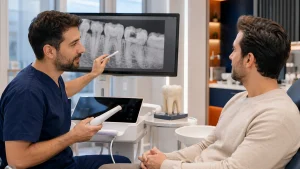
Assessment starts with symptoms, expectations, dental and medical history, medicines, smoking status and previous treatment. The clinician examines remaining teeth, gums, jaw relationships, bite, smile line, speech and the space available for a full-arch prosthesis.
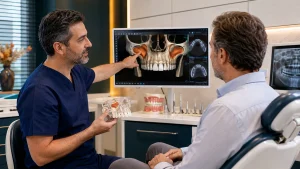
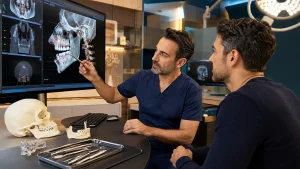
Photographs, digital scans and appropriate X-rays or cone beam CT imaging support surgical and restorative planning. The proposed bridge should guide implant positions—not the other way around. Bone volume, nerve and sinus anatomy, lip support and cleaning access all influence the design.
If teeth remain, each one should be assessed before irreversible extraction. The consent discussion should compare reasonable options, including periodontal or restorative care, conventional dentures, implant overdentures and fixed full-arch solutions using the number of implants appropriate to the case.
PLANNING TREATMENT ABROAD
Why the complete timeline matters before travelling
International patients may value English-language coordination and the ability to organise surgical and restorative appointments within a planned visit. The clinical pathway, however, extends beyond the operation day.
Confirm how many visits are expected, which stages must be completed in person, what type of temporary teeth will be provided, when the definitive bridge is planned and who manages urgent problems after you return home. Remote communication can support care but cannot replace every clinical review.
Immediate teeth do not mean final teeth.
A same-day or early bridge is normally provisional and designed for the healing phase. Fit, bite and tissue shape can change after extractions and surgery. The definitive restoration is planned after healing and clinical reassessment.
WHAT THE PATHWAY MAY INCLUDE
Six parts of a full-arch implant plan
The exact sequence varies. Some patients need extractions or bone management, while others start with an already toothless jaw. Every stage should connect to the intended final restoration.
01 · DIAGNOSIS
Clinical and 3D Assessment
The team evaluates teeth, gums, bone, anatomy, bite, smile, medical risks and restorative space before recommending a full-arch option.
02 · DESIGN
Restoration-Led Planning
Digital or conventional records are used to plan the tooth position, bridge design, implant distribution and any surgical guide or temporary prosthesis.
03 · SURGERY
Extractions and Implant Placement
Teeth judged unsuitable for retention may be removed and implants placed according to the approved plan. Additional bone procedures may still be necessary.
04 · PROVISIONAL
Temporary Fixed Bridge
If implant stability and other clinical conditions are suitable, a provisional fixed bridge may be connected. Otherwise, a different temporary solution is used.
05 · HEALING
Integration and Review
The implants heal within the bone while the team checks the tissues, bite, hygiene and provisional bridge. Adjustments or repairs may sometimes be needed.
06 · FINAL PHASE
Definitive Bridge and Maintenance
After reassessment, new records are taken for the final restoration. Long-term professional maintenance and daily cleaning remain essential.
RECOVERY AND AFTERCARE
What to expect after full-arch implant surgery
The anaesthesia plan depends on the procedure, your health and the clinical setting. After surgery, soreness, swelling, bruising and minor bleeding can occur. Extractions, bone procedures and treatment of both arches can change the recovery experience.
Follow the personalised instructions for medicines, oral hygiene, diet and physical activity. A softer diet is commonly required while the implants and provisional bridge are healing. Do not test the bridge with hard or sticky foods simply because it feels fixed.
Risks include infection, bleeding, implant failure, nerve or sinus complications, loss or fracture of the provisional bridge, loosening of components, speech or bite adaptation, hygiene difficulties and later peri-implant disease. Contact the treating team promptly if symptoms or the bridge do not follow the expected course.
A fixed bridge still needs daily cleaning and professional care.
Food and plaque can collect around the prosthesis and implants. The team should demonstrate the recommended brushes, flossing aids or other cleaning methods and define the professional maintenance schedule before treatment is completed.
STEP-BY-STEP PROCESS
The All-on-4 journey from assessment to final teeth
The sequence below is a planning framework, not a guaranteed timetable. Findings during assessment or surgery can change the next stage.
01
Initial records and remote review
Share requested photographs, X-rays, scans, dental history, medical information and medicine details. A remote review can identify the next examination but cannot confirm the final plan.
02
In-person assessment and consent
The team confirms tooth prognosis, implant suitability, prosthetic design, alternatives, risks, provisional options, expected visits and responsibilities after returning home.
03
Surgery and provisional restoration
Planned extractions and implant placement are completed. A fixed provisional bridge is attached only when the implants and clinical conditions permit immediate loading.
04
Healing, reviews and adjustments
The team checks wound healing, implant integration, bite, hygiene and the temporary bridge. Travel and follow-up arrangements should remain flexible if additional care is needed.
05
Definitive restoration and maintenance
After clinical reassessment, new records are used to make the final bridge. Long-term reviews, professional cleaning and timely repair of components help protect the implants and prosthesis.
WHY DR. SMILE ANTALYA
One coordinated surgical and restorative pathway
Dr. Smile Antalya can coordinate initial record sharing, three-dimensional assessment and English-language communication for international patients considering full-arch implant treatment. The purpose of the first review is to identify the appropriate clinical options—not to promise All-on-4 before examination.
If this pathway is suitable, request a written plan showing which teeth will be retained or removed, the proposed implant and bridge design, provisional restoration, healing reviews, definitive phase and long-term maintenance.
A responsible plan also explains what happens if immediate loading is not possible, an implant does not integrate, the temporary bridge needs repair or further treatment becomes necessary after you return home.
COMMON QUESTIONS
Frequently asked questions
The concept is based on four implants supporting one full arch. However, the clinically appropriate number and distribution of implants can differ. The final recommendation should follow the anatomy, restorative design, risks and alternatives.
No. A provisional fixed bridge can be attached only if implant stability and other clinical conditions support immediate loading. A removable or delayed temporary option may be safer in some cases.
No. Each tooth should be assessed individually. Teeth with a reasonable prognosis may be worth preserving, and full-arch extraction should not be based only on convenience.
No. Angled implant positioning may reduce the need for grafting in selected anatomies, but some patients still require bone augmentation or a different implant strategy.
The surgical visit is only one stage. Healing, implant integration, reviews and fabrication of the definitive bridge usually extend the pathway over several months. Your written plan should show every expected visit.
Daily cleaning is required around the implants and beneath the bridge using the methods demonstrated by the dental team. Regular professional reviews are also needed to monitor the tissues, implants, bite and prosthetic components.
Sources and content note
The All-on-4 concept was checked against the original Maló, Rangert and Nobre clinical study. Full-arch implant-number and tooth-preservation principles were checked against the International Team for Implantology consensus statement. General implant stages, healing and aftercare were checked against Guy’s and St Thomas’ NHS Foundation Trust, Leeds Teaching Hospitals NHS Trust and the British Association of Oral and Maxillofacial Surgeons. Content updated 31 August 2026.
This article provides general information only. It does not replace an examination, diagnosis, consent discussion or personalised advice from the clinicians responsible for surgical and restorative care.