



THE SHORT ANSWER
A cavity can contribute to bad breath—but persistent odour is not proof of tooth decay.
Holes in teeth, trapped food, plaque, gum disease and dental infection can all contribute to unpleasant breath or a bad taste. However, bad breath can also be linked to tongue coating, dry mouth, smoking, diet, tonsillitis, acid reflux and other causes.
Because smell alone cannot identify the source, persistent bad breath should be assessed rather than repeatedly covered with mints or mouthwash. A dentist can check for dental causes and advise whether another health professional should be involved.
TOOTH DECAY AND BREATH
How can a decayed tooth affect breath?
Tooth decay develops when plaque bacteria process sugars and produce acids that damage the tooth surface. As a cavity enlarges, it can become harder to clean and may trap food and plaque. These local conditions can add to an unpleasant smell or taste.
If decay reaches the centre of the tooth or an infection develops around the root, symptoms can include pain, temperature sensitivity, swelling, a bad taste or drainage. Some cavities cause few noticeable symptoms, so the absence of pain does not rule out decay.
- Brush twice daily with fluoride toothpaste
- Clean between teeth and around restorations every day
- Gently clean the tongue and stay hydrated
- Arrange a dental check if the odour persists
- Seek urgent help for swelling or breathing and swallowing difficulty
FINDING THE CAUSE
CLINICAL PRIORITY
Do not only mask the odour—identify the source
Teeth and restorations
Cavities, cracks, leaking fillings and food traps
Gums and oral tissues
Plaque, bleeding, pockets, infection and tongue coating
Saliva and health factors
Dry mouth, medicines, smoking and other possible causes
What a dental assessment may include
The dentist will ask when the odour started, whether it is constant, and whether you have pain, sensitivity, bleeding gums, a bad taste, dry mouth, loose teeth, swelling or problems with fillings and dentures.
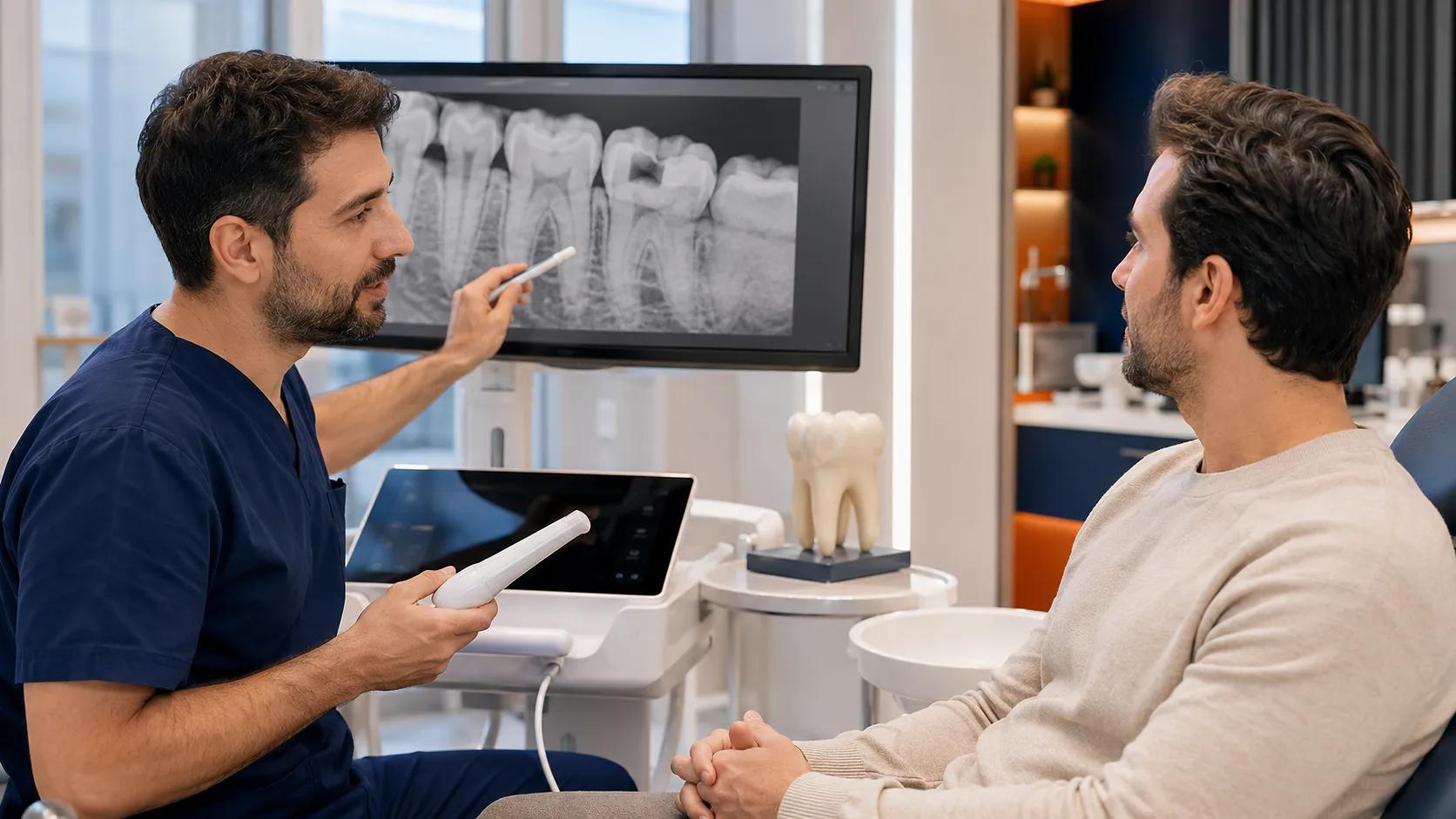
The examination checks tooth surfaces, existing restorations, gum health, plaque-retentive areas, the tongue and other oral tissues. X-rays may be recommended when decay, infection or bone changes cannot be assessed fully by looking in the mouth.
If no dental explanation is found, or symptoms suggest another source, you may be advised to speak with a doctor or another relevant professional. Bad breath is a symptom, not a diagnosis by itself.
CLUES TO WATCH FOR
When might bad breath have a dental cause?
Persistent odour together with toothache, sensitivity, a visible hole, a damaged filling, food repeatedly catching in one area, bleeding or swollen gums, a loose tooth, pus, swelling or a persistent bad taste makes a dental examination especially important.
These signs do not confirm that one decayed tooth is responsible. Gum disease and infection can occur around several teeth, and people are not always able to judge their own breath accurately.
No pain does not mean no dental problem.
Early decay and gum disease can progress with limited discomfort. Regular dental checks can detect problems before they become painful, while persistent bad breath gives another reason to arrange an assessment.
COMMON CAUSES
What else can cause unpleasant breath?
More than one factor can be present at the same time. The examples below are common possibilities, not a self-diagnosis checklist.
TEETH
Cavities and Dental Infection
Decay, food traps, cracked teeth and abscesses may contribute to odour or a bad taste. Treatment must address the damaged or infected tooth.
GUMS
Plaque and Gum Disease
Inflamed or infected gums can bleed, become swollen and produce persistent bad breath or an unpleasant taste. Professional assessment determines the stage and treatment.
TONGUE
Tongue Coating and Oral Hygiene
Bacteria and debris can collect on the tongue and between teeth. Brushing, interdental cleaning and appropriate tongue cleaning can reduce this build-up.
SALIVA
Dry Mouth
Reduced saliva can increase odour and the risk of decay. Dehydration, medicines, mouth breathing and some treatments or health conditions can contribute.
HABITS
Smoking, Diet and Fasting
Tobacco, strong-smelling foods and drinks, alcohol, fasting and crash diets can affect breath. Smoking also increases the risk of gum disease.
BEYOND THE MOUTH
Other Health Causes
Tonsillitis, acid reflux and some medical conditions may contribute. If dental causes are excluded, further medical assessment may be appropriate.
TREATMENT
How is bad breath linked to decay treated?
Treatment depends on what the examination finds. Early decay may be managed with preventive fluoride measures, while a cavity may require a filling. If decay has reached the pulp, root canal treatment may be considered; a tooth that cannot be restored may need extraction.
Gum disease requires its own cleaning and maintenance plan. Dry mouth, damaged restorations, dentures and oral infections are treated differently. Antibiotics are not a routine cure for tooth decay and do not replace treatment of the source of a dental abscess.
Once the cause is treated, daily plaque control helps reduce recurrence. Follow the personalised advice on fluoride toothpaste, interdental cleaning, diet, smoking and review intervals.
Mouthwash can freshen breath without fixing the cause.
A rinse may temporarily change the smell, but it cannot restore a cavity, remove hardened deposits or treat an abscess. Use oral-care products as advised and arrange an examination when bad breath persists.
WHAT TO DO NEXT
Five practical steps for persistent bad breath
Self-care is useful, but symptoms that continue or accompany pain, bleeding or swelling need professional assessment.
01
Brush twice daily with fluoride toothpaste
Clean all tooth surfaces carefully and follow professional advice on toothpaste strength. Spit after brushing rather than immediately rinsing away the fluoride.
02
Clean between teeth and around dental work
Use floss, interdental brushes or another recommended aid to remove plaque and trapped food from areas a toothbrush cannot reach.
03
Clean the tongue and address dry mouth
Gently clean the tongue, drink water regularly and discuss persistent dryness or medicine-related symptoms with a dentist, pharmacist or doctor.
04
Book a dental examination if it persists
Arrange a check if bad breath continues for a few weeks, especially with toothache, sensitivity, bleeding gums, a bad taste, a damaged filling or loose teeth.
05
Recognise urgent warning signs
Seek urgent dental care for suspected abscess, facial or jaw swelling, fever, severe pain or difficulty opening the mouth. Breathing, speaking or swallowing difficulty requires emergency medical help.
WHY DR. SMILE ANTALYA
Treat the cause—not only the symptom
Dr. Smile Antalya can assess teeth, restorations, gums and other oral factors that may contribute to persistent bad breath. Appropriate examination and imaging help distinguish a cavity from gum disease, infection, food traps or another cause.
If treatment is required, the proposed plan should explain the diagnosis, reasonable options, expected stages and preventive care. A filling, root canal treatment, gum therapy or extraction is recommended only when supported by the clinical findings.
For international patients, record sharing can help organise an appointment, but a firm diagnosis and treatment plan require an appropriate clinical examination.
COMMON QUESTIONS
Frequently asked questions
Yes, a cavity can contribute by trapping plaque and food, and an infected tooth can produce a bad taste or odour. However, bad breath alone cannot confirm which tooth or condition is responsible.
Not necessarily. Plaque, gum disease, tongue coating, dry mouth, smoking, diet and non-dental conditions can also contribute. A dental examination helps narrow down the cause.
Brushing can reduce plaque and food debris, but it cannot repair a cavity or treat an infected tooth. The underlying dental problem needs the appropriate treatment.
No. Mouthwash may temporarily freshen breath, but it does not restore damaged tooth structure or remove the source of an abscess. Use it only as part of an appropriate oral-care plan.
Possible signs include intense tooth or gum pain, redness, sensitivity, a bad taste, facial or jaw swelling, fever and difficulty opening the mouth. A suspected abscess needs urgent dental assessment.
Bad breath itself is rarely an emergency. Seek immediate medical help if mouth or facial swelling causes difficulty breathing, speaking or swallowing, or if there is severe swelling around the mouth or eye.
Sources and content note
Bad-breath causes and advice on when to see a dentist were checked against the NHS bad breath guide. Tooth-decay treatment information was checked against the NHS tooth decay guide. Gum-disease symptoms were checked against the NHS gum disease guide. Abscess symptoms and emergency warning signs were checked against the NHS dental abscess guide. Content updated 31 August 2026.
This article provides general information only. It does not replace an examination, diagnosis or personalised advice from a dentist or doctor.