COMPOSITE BONDING IN ANTALYA
Tooth-coloured composite resin can repair selected chips, refine edges, close small spaces or adjust proportions. The best result begins with healthy teeth and gums, a stable bite and a design that respects natural tooth structure.
Treatment suitability and final planning are confirmed only after the appropriate clinical assessment.
Composite is often added to the tooth surface, although limited preparation may be required depending on the defect and design.
The visible design must work with neighbouring teeth, gum contours, speech, bite contacts and functional movement.
Resin can stain, wear, chip or debond and may need polishing, repair, modification or replacement over time.
WHAT IS COMPOSITE BONDING?
Composite bonding uses an adhesive system and tooth-coloured resin placed directly on a tooth. The dentist builds, contours, light-cures, finishes and polishes the material to address a defined restorative or aesthetic need.
It may suit selected small chips, worn edges, narrow spaces, localised shape differences or repair needs. It cannot be chosen safely from photographs alone, and it does not correct every colour, alignment, bite or structural problem.
ASSESSMENT BEFORE ADDITION
Clinical note: A natural tooth should not be prepared for bonding beyond what the diagnosis and material design require.
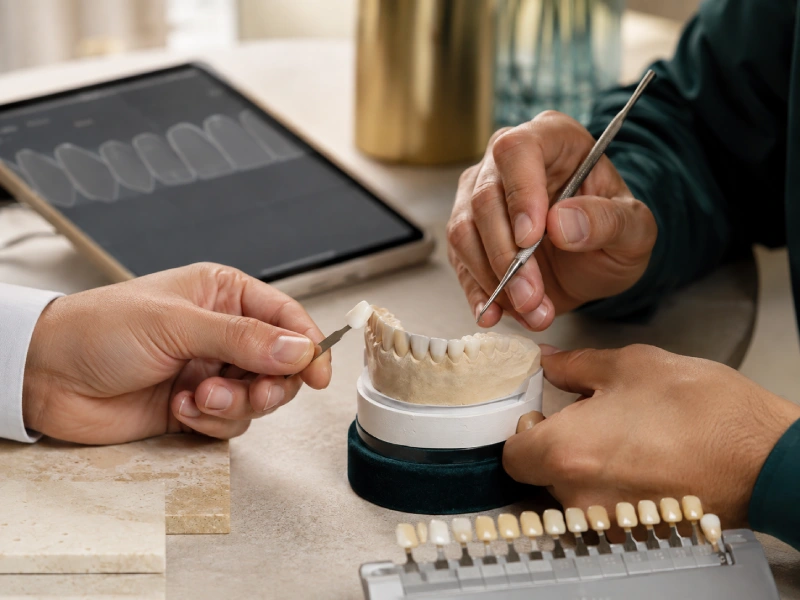
ASSESSMENT & PROCESS
The exact sequence depends on the tooth, the amount of change and whether disease, whitening, orthodontics or another restoration should be addressed first.
Important: One appointment may be possible for selected limited cases, but visit number and duration are not universal and are confirmed only after assessment.
Teeth, gums, existing restorations, wear, cracks, decay and symptoms are assessed.
The proposed form, proportions, colour and relationship with neighbouring teeth are planned.
The tooth is cleaned and isolated; preparation is kept to what the case and adhesive protocol require.
The surface is conditioned, bonding agent is applied and composite resin is placed in controlled increments.
Anatomy is shaped and each layer is polymerised using the appropriate curing protocol.
Edges, surface texture, contacts and bite are checked before polishing and aftercare guidance.
WHAT MAY BE POSSIBLE
Composite can be versatile, but the material should not be used to disguise disease, unstable bite relationships or a problem better treated through another route.
Localised loss of tooth structure may be rebuilt when the remaining tooth and bite support an adhesive repair.
Selected narrow spaces may be closed by changing tooth width and contact form without creating unbalanced proportions.
Small contour differences may be refined while respecting gum levels, speech, function and facial context.
Existing composite may sometimes be polished, added to or repaired instead of replaced completely.
WHEN ANOTHER PATH MAY FIT BETTER
Large structural loss, active decay, significant fractures, severe discolouration, major tooth-position change, unstable periodontal health or complex bite problems may require disease control, orthodontics, whitening, a veneer, an onlay/crown or another restorative plan.
BONDING OR ALTERNATIVE?
Material choice should follow diagnosis, tooth structure, the scale of change, bite, maintenance expectations and patient preference — not a single aesthetic photograph.
Often allows an additive or limited-preparation approach and can usually be repaired or modified.
More prone to staining, surface change, wear and chipping than some ceramic options and requires maintenance.
No treatment or monitoring, polishing or repair, whitening, orthodontics, ceramic veneer, onlay or crown when clinically justified.
These options differ in tooth preparation, timing, stain resistance, repairability, cost, biological risk and maintenance.
POTENTIAL ADVANTAGES
Direct composite can be useful where an additive repair or small shape change meets the clinical need. Its future maintenance should be part of the decision from the start.
Many selected cases need little or no removal of sound tooth, although this is not universal.
The dentist shapes colour, contour and texture directly at the chair.
Localised defects may sometimes be repaired, polished or added to rather than fully replaced.
A limited restorative change may be considered before a more invasive option when clinically appropriate.
LIMITATIONS & RISKS
CARE & LONGEVITY
There is no guaranteed lifespan. Tooth position, restoration size, bite forces, grinding, habits, diet, hygiene, smoking, material handling and professional maintenance all influence service time.
Brush effectively, clean between the teeth, avoid using bonded edges to bite hard objects and attend the individual review schedule. Report roughness, movement, sensitivity, chipping or bite changes.
REAL COMPOSITE BONDING RESULTS
Show consented Dr. Smile Antalya cases only after the starting condition, treated teeth, restorative objective, composite material, preparation, bite considerations, maintenance and follow-up have been clinically verified.

Individual results vary. Images must have documented patient consent, and treatment descriptions must be clinically verified before publication.
INTERNATIONAL PATIENT SEQUENCE
Photographs can organise an initial conversation, but they cannot confirm enamel condition, active disease, cracks, bite, shade behaviour or whether bonding is the most conservative option.
Explain the teeth and changes you are considering; the team will advise which non-sensitive records may be useful.
Examination confirms oral health, tooth structure, bite, shade and whether another treatment should come first.
The number of teeth, isolation, layering, finishing and bite adjustment determine the clinical sequence.
Polish, repair, bite review and hygiene needs are explained, including when local professional support is advisable.
FREQUENTLY ASKED QUESTIONS
These answers are general information. The treating dentist must explain what applies to your teeth, bite, material and alternatives.
It is a direct adhesive restoration in which tooth-coloured composite resin is placed, shaped, light-cured, finished and polished on a tooth.
Selected people with healthy or stabilised teeth and gums, an appropriate amount of tooth structure, manageable bite forces and a defined restorative or aesthetic need may be assessed. Suitability is not confirmed online.
Often little or no sound tooth is removed, but this is not guaranteed. Cleaning, surface conditioning, removal of disease or defective material and limited contouring may be required.
No. The size and cause of a space, tooth proportions, gum levels, bite and tooth position determine whether bonding, orthodontics or another option is more appropriate.
Some limited cases may be treated in one clinical visit, but the number and length of appointments depend on examination, tooth number, disease control, planning and finishing needs.
Many additive cases need no local anaesthetic, but sensitivity, existing damage, preparation and individual comfort needs vary. The team will explain what is expected for the planned teeth.
There is no fixed or guaranteed lifespan. Restoration size, tooth position, bite, grinding, habits, hygiene, diet, material handling and maintenance all influence service time.
Whitening changes natural tooth colour but does not whiten existing composite in the same way. If whitening is appropriate, the sequence and final shade should be planned before bonding.
Biting hard objects, heavy bite forces, grinding, impact, staining exposure, poor hygiene and untreated disease can increase wear, chipping, staining or failure risk.
Often a localised chip, rough area or shade issue can be assessed for polishing, addition or repair, but some restorations require more extensive replacement or another treatment.
ASK ABOUT COMPOSITE BONDING
Tell us which teeth concern you, what you would like to change and whether you have sensitivity, chips, existing restorations or grinding habits. Our patient coordination team will explain which records may be useful for an initial review.
WhatsApp: +90 545 213 09 59
Clinic: +90 545 213 09 09
Email: info@drsmileantalya.com
Fields marked as required must be completed.